Contact Us

We offer both in person services based in Mission Valley as well as telehealth services via video-conferencing platforms to patients located in California.

We do not accept walk-ins. You must contact our Clinic Coordinator at 858-354-4077 or info@csamsandiego.com before visiting us on site.

CONTACT US

IF YOU WOULD LIKE TO INQUIRE ABOUT TREATMENT AT CSAM, PLEASE FILL OUT THE FORM AND A THERAPIST WILL CONTACT YOU TO MAKE AN APPOINTMENT.

You may also contact us via phone or email:

Phone: 858-354-4077

Email: info@csamsandiego.com

7860 Mission Center Ct, Suite 209
San Diego, CA, 92108

858.354.4077

At The Center for Stress and Anxiety Management, our psychologists have years of experience. Unlike many other providers, our clinicians truly specialize in the diagnosis and treatment of anxiety and related problems. Our mission is to apply only the most effective short-term psychological treatments supported by extensive scientific research. We are located in Rancho Bernardo, Carlsbad, and Mission Valley.

full banner.jpg

Blog

Read our award-winning blogs for useful information and tips about anxiety, stress, and related disorders.


Anxiety and Chronic Illness

Jill Stoddard

by Jan E. Estrellado, Ph.D.

Chronic illness affects half of all adults (117 million) in the United States (Center for Disease Control, 2012). These conditions can include chronic pain, fibromyalgia, arthritis, heart disease, HIV, and cancer. While the types of conditions vary broadly, stress and anxiety are common experiences for individuals with long-term illnesses.  

The Stress of Having a Chronic Illness

Normal
0


false
false
false

EN-US
JA
X-NONE


 <w:LatentStyles DefLockedState="false" DefUnhideWhenUsed="true"
DefSemiHidden="true" DefQFormat="false" DefPriority="99"
LatentStyleCount="276">…

Image source: https://massage.elitecme.com/blog/chronic-illness-massage-therapy/


Anxiety may result in part from the unpredictable nature of a chronic illness.  For example, a person with chronic pain will likely have some days when he or she can go for long walks and some days when getting out of bed is too challenging.  The tough part is not knowing when the bad days come.  The anticipation and fear of the pain, even more than the pain itself, is a better predictor of long-term functioning  (Turk, 2002). 

Because the experience of a chronic condition is specific to each individual, it can be difficult to feel connected to others.  Isolation is common, which can both disrupt relationships and intensify negative thinking (“No one understands what I’m going through,” “I have to take care of this on my own,” “I don’t want to burden my family,” etc.).  When those negative thoughts start to spin out of control, especially without the support of others, one’s ability to manage anxiety lessens.

For a child with chronic illness, fear and anxiety can be especially common.  The unpredictability of a chronic illness can shape how he or she views the world as an adult.  Knowing that caregivers cannot control discomfort or pain may be particularly terrifying for a young person.  A child may internalize the uncertainty of what life will look like with a chronic illness (“Will I still be able to go school,” “What will my friends think,” “Will I have to take medications forever,” etc.).

Managing Anxiety Related to Chronic Illness

Each person chooses how to manage his or her chronic illness in the best way possible with the resources they have.  An important step in managing anxiety related to chronic illness is to ask one’s self about the benefits, as well as the costs, of those choices.  For example, someone with heart disease may feel that by eating whatever he wants, he is in control of his life and that his condition does not exist.  But the stress of feeling ashamed or of disappointing others also takes its toll.  Being open and honest with one’s self about the pros and cons of choices is a crucial step to managing stress.  When a person can have this conversation with one's self, he or she might be more willing to ask if this choice supports the type of person he or she want to be.

Normal
0


false
false
false

EN-US
JA
X-NONE


 <w:LatentStyles DefLockedState="false" DefUnhideWhenUsed="true"
DefSemiHidden="true" DefQFormat="false" DefPriority="99"
LatentStyleCount="276">…

Image source: http://www.huffingtonpost.com/2011/06/30/chronic-pain-13-americans_n_887749.htm

Another way to help manage anxiety about a chronic condition is to be as present as possible, even when it is difficult.  Calling attention to your thoughts, feelings, and bodily sensations in a non-judgmental way is the practice of mindfulness.  This can be especially difficult when what you think, feel, or experience is intense pain or discomfort.  However, a review of research showed that mindfulness-based practices can improve patient outcomes not just for chronic illness management, but also for depression and anxiety (Grossman, Niemann, Schmidt, & Wallach, 2004). 

If you have a family member with chronic illness, your support is very important.  A research review on the relationship between family support and chronic illness found that patients responded most positively when their families emphasized self-reliance and personal achievement, family cohesion, and responding attentively to symptoms (Rosland, Heisler, & Piette, 2012).  Continuing to reach out to your family member with a long-term condition can make a huge difference in their management of their illness. 

Living with a chronic illness is by no means easy.  Living well with a chronic illness, however, is possible.  With the right support and coping skills, individuals with chronic conditions can take concrete steps on the path of living with, but not being ruled by, long-term illness. 

CSAM is here to help

If you or someone you love might benefit from acceptance and commitment therapy (ACT), cognitive behavioral therapy (CBT), or biofeedback for anxiety, depression, stress, or a chronic medical illness, or if you would like more information about our therapy services, please contact us at (858) 354-4077 or at csamsandiego@gmail.com.


References:

Center for Disease Control (2012).  Chronic diseases: the leading causes of death and disability in the United States.  Retrieved from http://www.cdc.gov/chronicdisease/overview/.

Grossman, P., Niemann, L., Schmidt, S., & Walach, H. (2004).  Mindfulness-based stress reduction and health benefits: a meta-analysis.  Journal of Psychosomatic Research 57(1): 35-43.

Rosland, A.M., Heisler, M., & Piette, J.D. (2012).   The impact of family behaviors and communication patterns on chronic illness outcomes: a systematic review.  Journal of Behavioral Medicine 35(2): 221-39.  doi: 10.1007/s10865-011-9354-4.

Turk, D.C. (2002).  A diathesis-stress model of chronic pain and disability following traumatic injury.  Pain Research & Management, 7(1): 9-20.

Pursuing Values over Resolutions in the New Year

Jill Stoddard

by Jan E. Estrellado, Ph.D.


2016 has arrived!  As we say good-bye to 2015, it’s time to look forward to setting intentions for the new year.  Knowing that resolutions don’t always work out, what if we tried basing those intentions on our values rather than on our goals?

Image source:&nbsp;http://allisonpataki.com/set-new-years-resolutions-january/

Image source: http://allisonpataki.com/set-new-years-resolutions-january/

The Problem with Resolutions

It seems that while many people make resolutions every year, only a few are able to maintain those changes.  According to the Statistic Brain Research Institute (2015), 45% of people in the U.S. make resolutions, but only 8% of people successfully achieve them.  In 2015, the top three resolutions for the new year were losing weight, getting organized, and spending less/saving more.

Why might it be so hard for us to accomplish the resolutions we set so hopefully at the beginning of each year?  And perhaps more importantly, how do we deal with and recover from the guilt, anxiety, stress, and embarrassment that often come when we fail to meet these goals?

For some helpful answers, we might look to Acceptance and Commitment Therapy (ACT), an evidence-based intervention that, in the words of Happiness Trap author Russ Harris (2008), “helps people create a rich and meaningful life, while effectively handling the pain and stress that life inevitably brings.” 

According to ACT (pronounced as one word), it is the struggle with “what’s wrong” in our lives that causes much of our suffering.  We’ve all been there: the slice of chocolate cake we couldn’t resist, the day we chose to stay home instead of going to the gym, or spending more than we wanted to eating out.  It is normal to feel ashamed, guilty, or frustrated with ourselves, often accompanied by thoughts of self-judgment and doubt (i.e., I have no self-control, I was doomed to fail from the start, etc.).  It is so easy to spend time and energy beating ourselves up for what we should have done, that we end up in a worse place than when we started.  How many of us have eaten that second slice of chocolate cake to soothe our guilt about eating the first one? 

Values-Based Living

Normal
0


false
false
false

EN-US
JA
X-NONE


 <w:LatentStyles DefLockedState="false" DefUnhideWhenUsed="true"
DefSemiHidden="true" DefQFormat="false" DefPriority="99"
LatentStyleCount="276">…

Image source: http://www.sanitygurus.com/relaxation/

In contrast to resolutions, values are never finished.  Think of values as the direction you are headed in (“westward”) versus a destination west of you (“Hawai’i”).  One can continue on in that direction indefinitely and it will never be done.  It is a series of choices we make over and over again to carve out a path in the direction of that value. 

What might values-based living look like as an alternative to New Year’s resolutions?  Let’s take the #1 resolution of 2015: losing weight.  Why might losing weight be important to you? Do you want to feel good in your body, to invest in your physical health, to live longer for your family or to model healthy behaviors to your children?  Clarifying why we choose a goal might be more important than the goal itself.  For example, if I want to live long enough to see my kids grow up, my choices might focus more on being active with my kids and less on counting calories.  I may or may not lose weight, but keeping my choices and behaviors aligned with my greater value moves me toward the person I would like to be.

Acting in service of our values does not mean that the path will be easy or comfortable.  In fact, choosing our values means that we also choose the pain that will inevitably come.  Living from our values means we accept that painful and unwanted outcomes sometimes happen. Staying the values-based course as the painful stuff happens is what gives us meaning and purpose.

Are you willing to give values a try this year?


CSAM is here to help

If you or someone you love might benefit from acceptance and commitment therapy (ACT), cognitive behavioral therapy (CBT), or biofeedback for anxiety, depression, stress, or a chronic medical illness, or if you would like more information about our therapy services, please contact us at (858) 354-4077 or at csamsandiego@gmail.com.

References:

Statistics Brain Research Institute (2015).  New years resolution statistics.  Retrieved from http://www.statisticbrain.com/new-years-resolution-statistics/

Harris, R. (2008).  What is acceptance and commitment therapy?  Retrieved from   http://www.thehappinesstrap.com/about_act


Travel-Related Anxiety

Jill Stoddard

Normal
0


false
false
false

EN-US
JA
X-NONE


 <w:LatentStyles DefLockedState="false" DefUnhideWhenUsed="true"
DefSemiHidden="true" DefQFormat="false" DefPriority="99"
LatentStyleCount="276">…

Image source: http://www.oncallinternational.com/blog/holiday-air-travel-survival-guide/

Many people travel during the holiday season to visit friends and family.  For those struggling with anxiety, traveling by personal car, airplane, bus or train, can be triggering and stressful.  The expectation to visit loved ones living afar can cause pressure and conflict within relationships and families when someone feels they cannot travel.

Types of Travel Phobias

According to the U.S. Department of Transportation (2001), 91% of holiday travel is via personal car.  Car-related fears can stem from either being the passenger or from being the driver (Neuman, 2012).  Anxious passengers may feel like they are not in control, while anxious drivers may feel like they may lose control of their vehicles due to panic attack or an accident (Neuman, 2012).   Fear of having a panic attack while driving is a common concern.  People cope with these fears by limiting how far they drive, how often they are in the car, and by only being in the driver’s (or passenger’s) seat.  This can have a debilitating effect on one’s ability to work, socialize, and get outside the house. 

The fear of flying can come in various forms, including fear of having a panic attack while on a plane, fear of crashing, and claustrophobia (Seif, n.d.).  There are multiple aspects of flying that might trigger anxiety, including long lines at the airport, being far away from home, extended waits on the runway, or turbulence (Seif, n.d.). 

People who have difficulty riding on trains or on buses often have fears that they will be involved in an accident, that they will have a panic attacks while on the bus or train, or that they will feel trapped and unable to escape or get help. 

Treatment of Travel Phobias

Normal
0


false
false
false

EN-US
JA
X-NONE


 <w:LatentStyles DefLockedState="false" DefUnhideWhenUsed="true"
DefSemiHidden="true" DefQFormat="false" DefPriority="99"
LatentStyleCount="276">…

Image source: http://www.in.gov/dva/2973.ht

Travel-related phobias can be successfully treated using exposure therapy.  Exposure therapy is an evidence-based treatment, meaning it has strong support within the scientific research literature showing the effectiveness of the treatment to manage these types of anxiety.  Exposure therapy is a type of cognitive behavioral therapy that includes the repetitive practice of engaging with the feared or triggering situation, within the safety of the therapeutic environment and with the guidance of a trained mental health professional.  

Social Anxiety

For people with social anxiety, traveling during the holidays can be doubly hard.  Traveling often means having to interact with others, especially if going by plane, train, or bus.  In addition, the pressure of socializing with others after arriving at your destination can be daunting. 

The treatment for social anxiety often includes exposure therapy.  Individuals receiving exposure therapy practice being in their feared social situations.  The goals in exposure therapy for social anxiety are to develop skills to manage uncomfortable and stressful feelings and to act in accordance with their desired social goals.

CSAM is here to help

CSAM can help you or someone you love by providing exposure therapy for travel-related and/or social anxiety, cognitive behavioral therapy (CBT), acceptance and commitment therapy (ACT), or biofeedback.  CSAM also helps treat other conditions related to anxiety, depression, stress, or a chronic medical illness.  If you would like more information about our therapy services, please contact us at (858) 354-4077 or at csamsandiego@gmail.com.

References:

Neuman, F.N. (2012).  Driving Phobia: An Ideal Treatment.  https://www.psychologytoday.com/blog/fighting-fear/201207/driving-phobia-ideal-treatment

Seif, M.N. (n.d.).  How can I overcome my fear of flying?  http://www.adaa.org/living-with-anxiety/ask-and-learn/ask-expert/how-can-i-overcome-my-fear-of-flying

U.S. Department of Transportation (2001).  U.S. Holiday Travel.  http://www.rita.dot.gov/bts/sites/rita.dot.gov.bts/files/publications/america_on_the_go/us_holiday_travel/html/table_01.html


Holiday Stress

Jill Stoddard

3 tips to staying healthy during the holidays

Read More

Oct. 11 - 17 is OCD Awareness Week

Jill Stoddard

What is OCD? 

Image source: &nbsp;http://www.jamesaltucher.com/2012/02/how-to-increase-your-productivity-500/

Image source:  http://www.jamesaltucher.com/2012/02/how-to-increase-your-productivity-500/

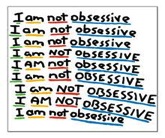
Have you ever found yourself obsessively worrying about whether you locked your door, turned off your stove, washed your hands well enough, or contaminated or harmed someone else?  While it is normal to have concerns in particular situations, individuals afflicted with obsessive compulsive disorder (OCD) experience intrusive, unwanted, distressing thoughts and images that they can’t stop from coming into their minds.  In order to cope with the anxiety that is experienced as a result of these obsessions, individuals with OCD often develop behavioral rituals, known as compulsions, such as hand-washing, cleaning, checking, and counting.  The compulsions tend to give individuals a feeling of temporary relief from their anxiety.  As a result, this relief reinforces the individual to continue performing the rituals.  OCD thoughts and rituals can dominate several hours of a person’s day, interfering with work, school, family, and social activities.  If left untreated, OCD can worsen over time.

Who Gets OCD?

It is estimated that 1 in 100, or approximately two to three million adults, are currently living with OCD in the United States.  An additional 500,000 children and teens in the U.S. are also estimated to suffer from OCD.  The exact causes of OCD remain unknown and are thought to be a complex combination of genetics, biology, and environment.  Research has indicated that OCD may be triggered in those who are vulnerable (e.g., have a genetic predisposition) by stressful life events, such as a devastating loss or a significant life change.  However, research has also suggested that some individuals are more prone to OCD than others.  There are specific brain areas that seem to have subtle differences when compared to brain images of those who do not have symptoms of OCD.  This may influence one’s ability to cope with stressful situations, as well as one’s likelihood for developing OCD.  OCD affects men, women, and children from all races and backgrounds equally. 

What is the Most Effective Treatment?

One of the most effective treatments for OCD is cognitive behavioral therapy (CBT), or specifically, Exposure and Response Prevention (ERP).  CBT/ERP is a present-centered, skill-based treatment that focuses on systematically reducing obsessions and compulsions and the anxiety associated with them.  Certain medications are also beneficial for treating OCD.

When Should I Seek Treatment?

If you or a loved one is experiencing any of the symptoms mentioned and these symptoms are taking up more than an hour per day and/or are interfering with normal functioning, you may want to consider contacting a mental health professional who specializes in Cognitive Behavioral Therapy or medication management for anxiety disorders and OCD. 

If you have questions and would like to speak with a professional at The Center for Stress and Anxiety Management, click here.

References

Farrell, L.J. (2011). Treatment outcome in adult OCD: Predictors and processes of change. Asia Pacific Journal of Counselling and Psychotherapy, 2(1), 82-97.

Anxiety Disorders Association of America: www.adaa.org.


Older Adults Afflicted with Depression, Stress and Anxiety

Jill Stoddard

Image source: &nbsp;http://www.tricitypsychology.com/older-adults-remember-the-good-times/

Image source:  http://www.tricitypsychology.com/older-adults-remember-the-good-times/

As the baby boomer generation ages, many more begin to experience the physical and mental challenges that inevitably accompany the aging process. The prevalence of mental illness has been found to increase with age. Research indicates that 20 percent of the American population over 55-years-old is afflicted by at least one mental disorder (APA, 2012). Furthermore, nearly 70 percent of those in long-term care facilities display psychological and behavioral challenges (APA, 2012). However, less than three percent of individuals in late adulthood have reported that they seek psychological treatment. Thus, there are likely many individuals within this population who have never sought treatment who could truly benefit from it.

A high co-occurrence rate has been identified between physical health problems and mental health problems. Unfortunately, many physicians fail to notice their patients’ anxiety and depression (Alexopoulos, 2005). As a result, an appropriate diagnosis may be overlooked and associated symptoms may be left untreated.

 Suicide Risk

 Older adults have the highest risk of suicide when compared to all other age groups (Connell, Chin, Cunningham, & Lawlor, 2004). In fact, they are two times more likely to commit suicide in comparison to the general population. Both social factors, such as isolation, and the prevalence of psychological disorders, highly impact the rate of suicide within this population (Alexopoulos, 2005). Thus, if the symptoms of mental disorders are unnoticed and left untreated, they may lead to fatal consequences. Research has shown that approximately 75 percent of older adults who have committed suicide have met with their doctor within the last month (APA, 2012). Thus, it is necessary for everyone, including physicians, to be aware of this high risk age group, so that proper precautions can be taken to prevent suicide and improve overall mental health care.

Potential Signs of Depression in Older Adults

 Here is a list of possible signs of depression in older adults according to the National Alliance on Mental Illness (NAMI, 2013, para. 3): 

  • Memory problems
  • Confusion
  • Social withdrawal
  • Loss of appetite
  • Weight loss
  • Vague complaints of pain
  • Inability to sleep
  • Irritability
  • Delusions (fixed false beliefs)
  • Hallucinations
  • Persistent and vague complaints
  • Help-seeking
  • Moving in a more slow manner
  • Demanding behavior

 Treatment

 While the prevalence of mental health problems is higher in older adults, the good news is that there are evidence-based treatments that can help. Cognitive behavioral therapy (CBT) has been demonstrated to be effective in relieving the symptoms associated with stress, anxiety, and depressive symptoms. In fact, structured therapies, such as CBT, have been found to be as “effective as antidepressants for moderate depression and may be more effective in reducing recurrence” (Ell, 2006, para. 12).

 If you know anyone who suffers from symptoms of depression, anxiety, or stress, please encourage them to seek professional support. If you are in the San Diego area and would like to speak to a professional at CSAM who specializes in CBT for older adult stress, mood, and anxiety problems, please contact us.


References

 Alexopoulos, G. S. (2005, June). Depression in the elderly. Lancet, 365(9475), 1961-1970. Retrieved from http://web.ebscohost.com

 American Psychological Association. (2012). Growing mental and behavioral health concerns facing older Americans. Retrieved from http://www.apa.org/about/gr/issues/aging/growing-concerns.aspx

 Connell, H. O., Chin, A. V., Cunningham, C., & Lawlor, B. A. (2004, October 16). Recent developments: Suicide in older people. BMJ, 329(7471), 895-899. Retrieved from http://www.ncbi.nlm.nih.gov/pmc/articles/PMC523116/

 Ell, K. (2006, July). Depression care for the elderly: Reducing barriers to evidence based practice. Home Health Care Serve Q, 25(1-2), 115-148.

 NAMI. (2013). National Alliance on Mental Illness. Retrieved from http://www.nami.org/Template.cfm?Section=By_Illness&template=/ContentManagement/ContentDisplay.cfm&ContentID=7515